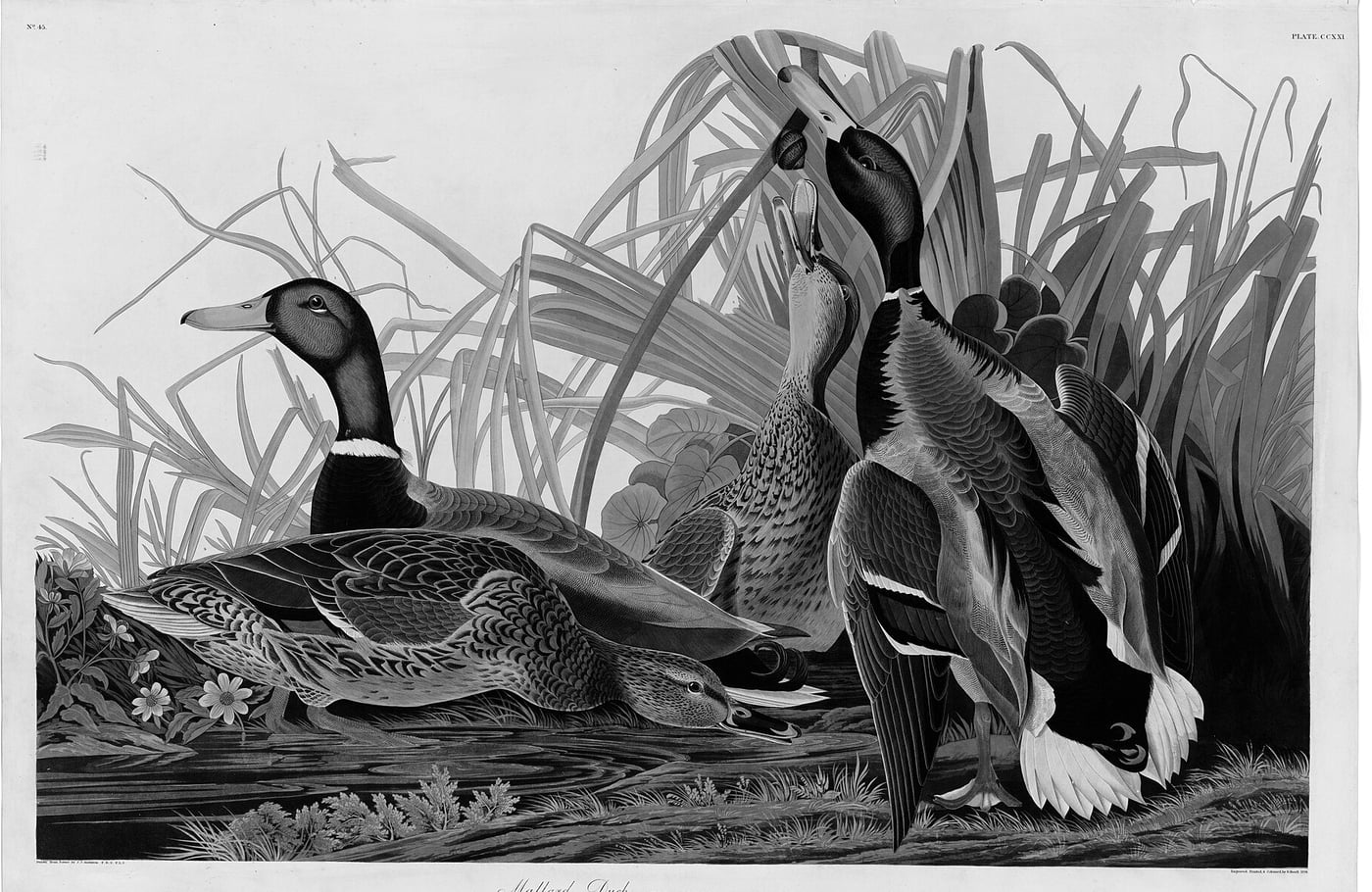
Drake Halford has filed a complaint against the reed-bed census, and the gist of it is simple. His household numbers seven. The census says three. They are, he adds, the wrong three.
Halford has lived on the east shore these seven seasons and is known to this paper as a patient bird. Interviewed at the bank shortly after filing, he said he expected the matter settled within the quarter and that, at minimum, he expected to be listed as himself. He had a second request, made with feeling. The three currently occupying his place on the rolls should be struck off, he said, ideally before they noticed the error and began to make claims on it. “I know two of them.” A pause. “I do not wish to know the third.”
Three names presently sit under the Halford heading. This paper has elected not to print them in full. The first is a drake of uncertain provenance, known to no one Halford trusts. The second is a coot struck from the last two censuses, for reasons now in dispute and growing more so. The third is an entry reading only “et al.” On that last one the Clerk conceded, on application, that it “should not, in strictness, appear at all on a line of this kind.” He did not say how it had come to appear. He rarely does.
The original filing, meanwhile, has gone missing. The Clerk’s account of where it went is worth following in sequence. In the morning it had been placed “somewhere sensible” and would turn up. By midday it was “somewhere damp,” and the Clerk requested an adjournment. By late afternoon the Clerk had stopped using the word somewhere altogether. He had taken to calling the file “the matter,” which this correspondent reads as a further decline in its whereabouts. The word sensible did not return.
How the file came to be lost is itself disputed. Sources near the Subcommittee say a passing heron may have eaten it. The heron has declined to confirm this. A third party was sent to take the heron’s account. He reports that the heron conveyed, by a slow blink and a pointed turn of the head, a single position. It “could not be expected to remember every slip of paper that happened to find its way past.” The third party is a frog, who asked not to be named on the grounds that he has paperwork of his own pending. He regards the heron’s statement as a denial in substance, if not in form.
Reaction on the east shore has been mixed. The household next door to the Halfords has a long quarrel with them over the placement of a particular reed. It called the confusion “regrettable, if overdue.” Another household, unrelated, sent sympathies and a gift of pondweed. Halford received the pondweed with dignity and later returned it, on the grounds that it too had been misfiled. Whether that was a joke, this correspondent could not establish, and Halford’s expression gave nothing away.
There is precedent, and it is not encouraging. Older readers will recall the great census of four seasons past. A whole household on the north bank was then listed as living on the south. It stayed so listed for the full term of the census, over repeated and increasingly pointed objection from the household. The Subcommittee resolved the matter in the end by declaring both listings valid simultaneously. This paper called the solution, at the time, “ingenious, if geometrically implausible.” It has had no cause to revise that view.
Halford has signalled he would accept a similar remedy. He attached one condition, and he stressed it. The other three, he said, must be “listed first on the fictional side.” He would not be moved on the ordering. The Subcommittee has taken the request under advisement. The Clerk noted, in an aside this correspondent was not meant to catch, that “advisement is, at present, the Subcommittee’s principal activity.”
No fresh census is contemplated. Halford, asked if he had anything to add, considered the bank for a moment and produced a single quiet HONK. It was, this correspondent judged, the most economical filing of the day, and the only one nobody could lose.